

Point-of-Care Testing Certification: A Fast, Affordable Way to Increase Your Value
Contents
Most phlebotomists look for the next credential that will move their career forward, and the conversation usually defaults to the obvious ones, including pediatric phlebotomy, EKG certification, or eventually a degree program. Point-of-care testing certification rarely comes up in that conversation, despite being one of the fastest, most affordable ways to add real value to your skill set and your paycheck.
What Point-of-Care Testing Actually Is
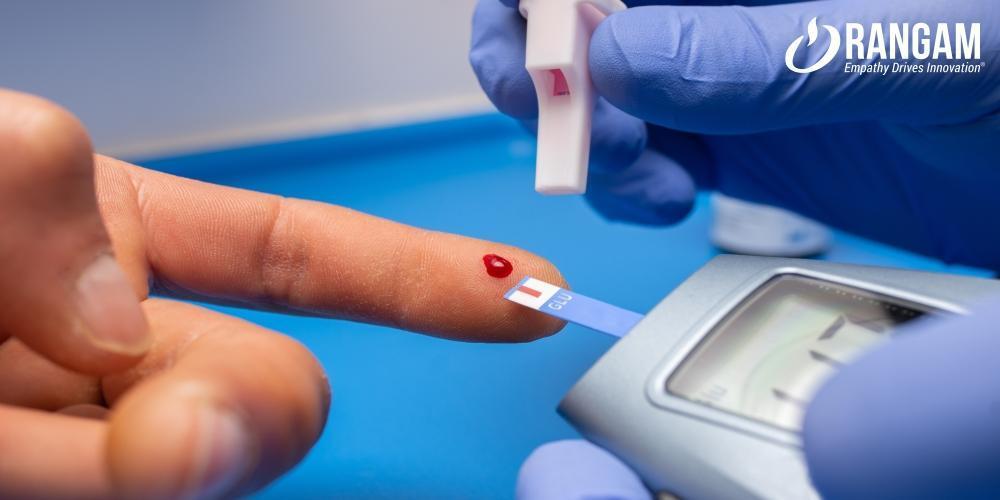
Point-of-care testing, commonly abbreviated as POCT, refers to diagnostic testing performed near the patient rather than sending a sample to a central laboratory. Glucose checks, rapid strep tests, blood gas analysis, coagulation testing, and rapid infectious disease panels are all common examples. The defining advantage of POCT is speed, since results that would take hours through a central lab can be available in minutes at the bedside, which directly speeds up clinical decision-making.
POCT has expanded significantly across emergency departments, urgent care centers, outpatient clinics, and hospital units in recent years, driven by the simple reality that faster results lead to faster treatment decisions. This expansion has created consistent demand for phlebotomists and other clinical staff who are trained and credentialed to perform these tests correctly.
Why Phlebotomists Are a Natural Fit for POCT
Federal regulations under the Clinical Laboratory Improvement Amendments, commonly known as CLIA, set personnel qualifications for who can legally perform different categories of testing. Waived testing, the simplest category, has no personnel qualification requirements beyond documented training, which means a certified phlebotomist can typically perform these tests once trained by their facility. Moderate complexity testing carries additional CLIA personnel requirements, but phlebotomists can often meet those requirements depending on their education level and their facility's specific policies.
This regulatory structure means phlebotomists are already well positioned to take on POCT responsibilities. The skill set overlaps directly with what phlebotomists already do every day, including specimen collection, infection control, safety precautions, and accurate documentation. Adding POCT certification formalizes and expands a set of competencies that build naturally on top of phlebotomy training rather than requiring an entirely new skill set.
The Time and Cost Investment Is Genuinely Low
This is where POCT certification stands out compared to other credentials phlebotomists considers for career advancement.
- Many POCT-specific courses are self-paced and can be completed in a matter of hours to a few days, rather than the weeks or months required for a full certification program
- Continuing education courses covering POCT fundamentals, such as those offered through ASCLS and other accredited bodies, often grant one to two continuing education credits and can be completed in a single sitting
- More advanced specialist-level certificates, such as the AMT Point-of-Care Testing Specialist credential, are built around a series of self-paced online modules followed by a single final assessment, with no requirement for in-person clinical hours beyond what a phlebotomist has already completed
- Costs for these courses and credentials are consistently lower than the $700 to $3,500 typically required for initial phlebotomy certification, making POCT one of the more affordable additions available to a working phlebotomist's credential set
- Facilities that expand their point-of-care testing programs need staff who are already credentialed to perform these tests, and a phlebotomist who arrives with that credential in hand is immediately more valuable than one who would need to be trained from scratch
- Emergency departments, urgent care centers, and outpatient clinics in particular rely heavily on point-of-care testing for time-sensitive clinical decisions, and these settings consistently look for staff who can handle both collection and point-of-care analysis
- A phlebotomist who can perform POCT in addition to standard venipuncture and capillary collection becomes more flexible for an employer to schedule and deploy, which translates into stronger job security and often a more competitive starting wage
- POCT experience also strengthens a resume for phlebotomists considering a future move into medical laboratory technician roles, since familiarity with point-of-care instrumentation, quality control, and regulatory requirements is directly relevant to that next tier of laboratory work
- Check whether your current employer already has an internal POCT training and competency program, since many facilities train staff directly on the specific devices and tests they use, and this internal training may be available to you immediately at no cost
- Look into continuing education courses on POCT fundamentals offered through accredited bodies such as ASCLS, which provide foundational knowledge and continuing education credit toward certification renewal requirements
- Consider a specialist-level certificate, such as the AMT Point-of-Care Testing Specialist credential, if you want a more formal, resume-ready credential beyond basic facility training
- Document every POCT competency you complete, including the specific device types and test categories you are trained on, since this becomes part of your professional record when applying for new roles or negotiating pay
Compared to pursuing a full additional certification or returning to school for a degree, POCT certification offers a meaningfully faster and more affordable path to expanding what you are qualified to do on the job.
The Direct Pay and Employability Impact
Specialized skills consistently translate into better pay and stronger job security across healthcare, and POCT certification is a clear example of that pattern.
How to Get Started
For a working phlebotomist interested in adding this credential, the path typically follows a few clear steps.
The Bottom Line
Point-of-care testing certification does not require a long training program, a significant financial investment, or time away from work to complete. It builds directly on skills phlebotomists already use every day, it is increasingly in demand across emergency, urgent care, and outpatient settings, and it gives you a credential that genuinely differentiates your resume without asking for a disproportionate amount of time or money in return. For a phlebotomist looking for the fastest, most practical next step in building professional value, POCT certification is one of the strongest options available.
Ready to Put Your Skills to Work?
Register on Talent Arbor today and explore current phlebotomist openings across hospitals, urgent care centers, and outpatient clinics nationwide, including roles that value point-of-care testing experience. Your next opportunity is closer than you think.